
MDI Marathon Race Report: Trust the Plan
Okay, I’ll admit it — I’m doing it again. Writing a race report way after the fact. A year and a half after the fact, to be precise. Look, consistency in running? Excellent. Consistency in blogging? Still a work in progress.
So. Marathon #2. The Mount Desert Island Marathon. And spoiler alert: it went really, really well.
But let’s back up a little.
Why Maine?
If you read my Colfax marathon report, you know I caught the running bug hard after that race. 1,740 miles in 2023, and I was already itching for round two. The question was: which race?
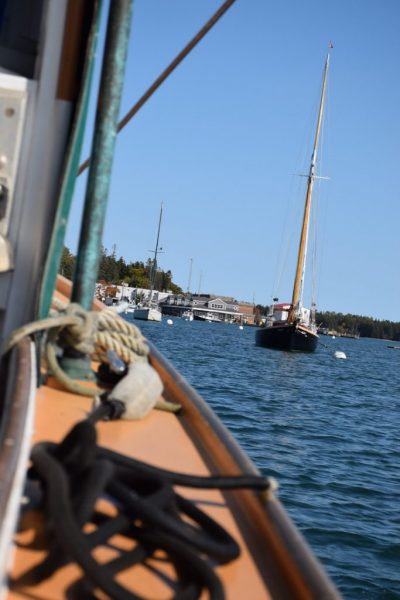
Mel and I love Maine. The rugged coastline, the fall foliage, the lobster rolls, the general feeling that life slows down just enough to actually enjoy it. When I stumbled across the MDI Marathon — a race that runs through Acadia National Park along the ocean on one of the most scenic courses in the country — it was a pretty easy sell. Destination marathon, here we come.
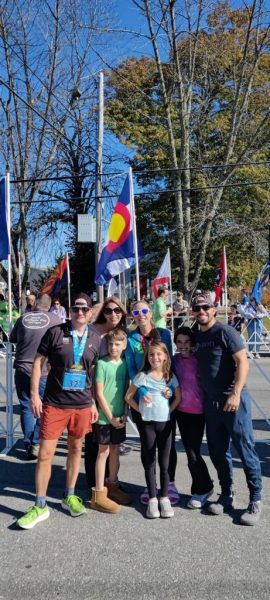
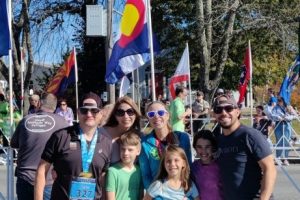
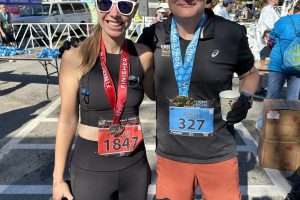
We made a proper trip out of it — traveling with our friends Kelsey and Adam and their two girls. Kelsey was also racing, tackling the half marathon. Good company, beautiful destination, zero excuses not to show up ready.
My goal this time: sub 4 hours. A significant step up from my 4:20:20 finish at Colfax (yes, that finish time was very much on purpose — shoutout to Leo, born on 4/20). But I felt ready to push.

Enter: The Hanson Method
For Colfax, I followed a training plan from the Marathon Handbook. It got me to the start line, but I bonked hard at mile 21 and spent the last three miles willing my cramping calves to keep moving through downtown Denver.
This time I wanted a real plan. After some research I landed on the Hanson Marathon Method, based on Luke Humphrey’s book. The basic idea is cumulative fatigue training: you run six days a week, with one rest day, building up a high volume of consistent miles. The long run is capped at 16 miles — which sounds counterintuitive and, honestly, made me nervous. How are you supposed to run 26.2 miles if your longest training run is only 16?
That’s the whole point, though. The Hanson Method isn’t about one heroic long run. It’s about arriving at race day already having spent weeks with tired legs, training your body to keep going when it’s fatigued. You don’t destroy yourself in training. You build a deep, durable base — and then you trust it.
Race Day
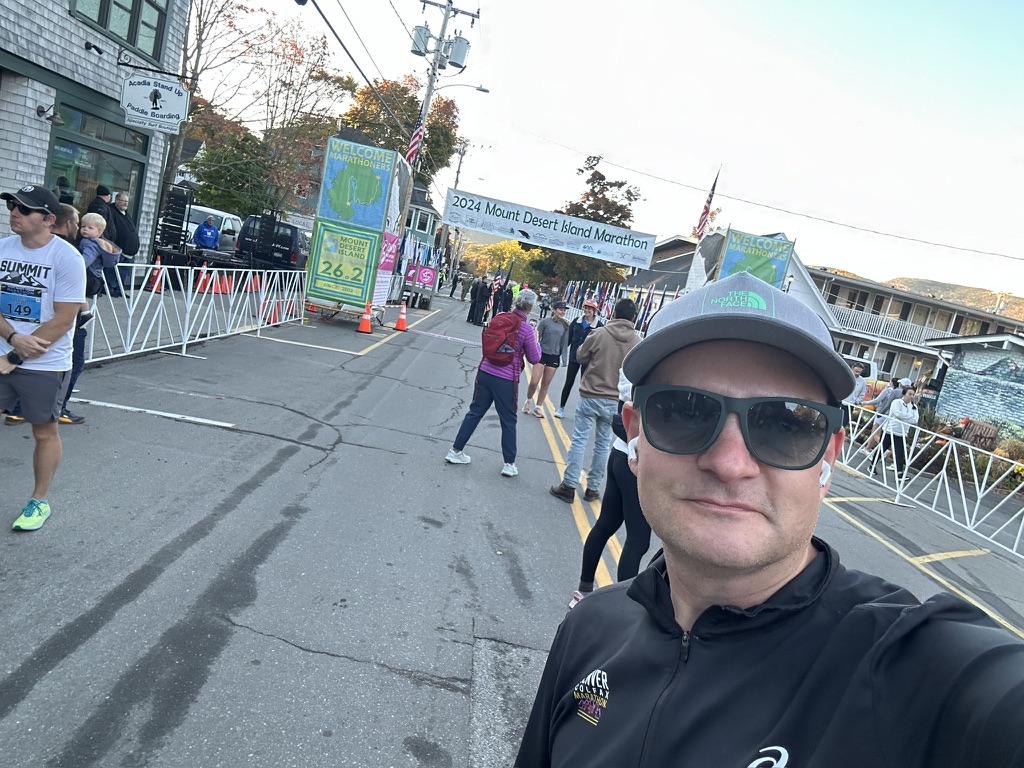
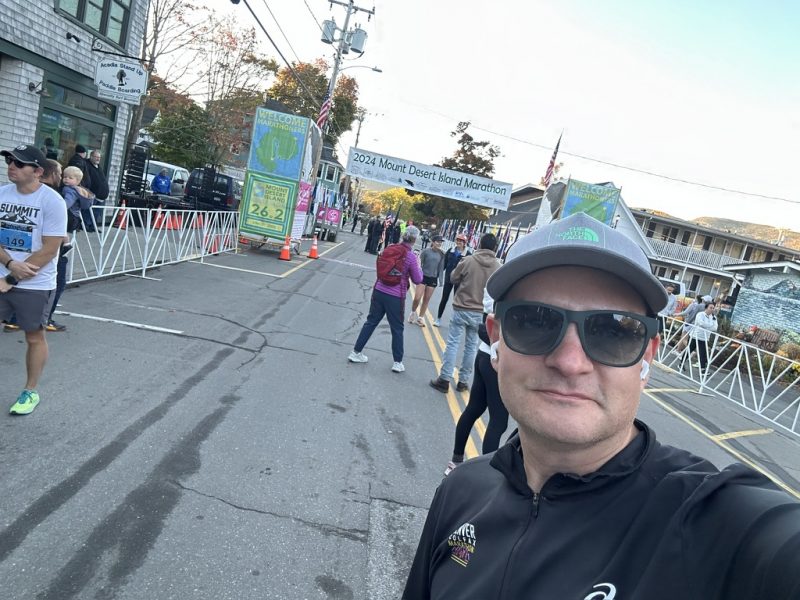
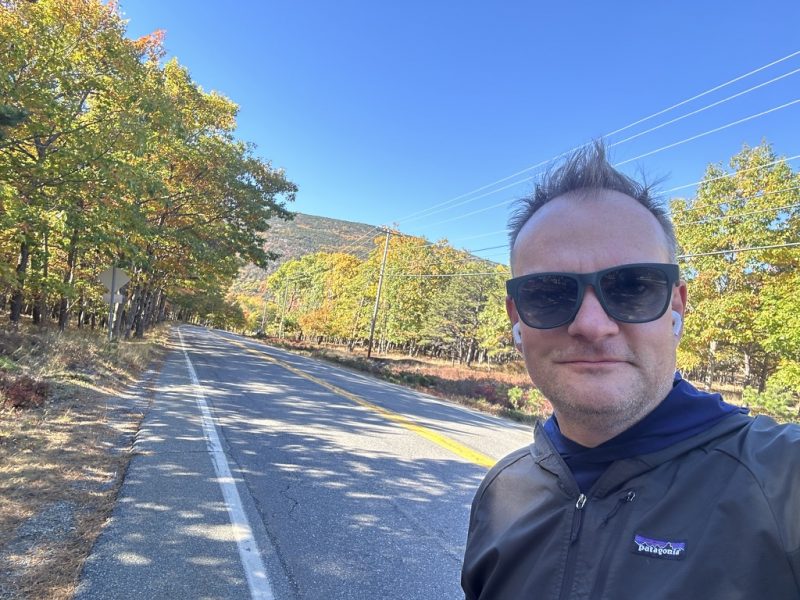
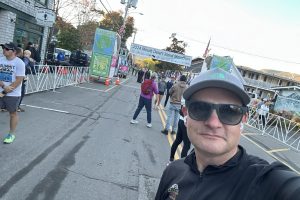
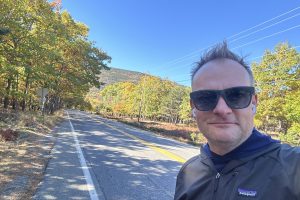
October 20th. Perfect fall morning on Mount Desert Island. The kind of weather that makes you feel like running — crisp, clear, that golden autumn light filtering through the trees.
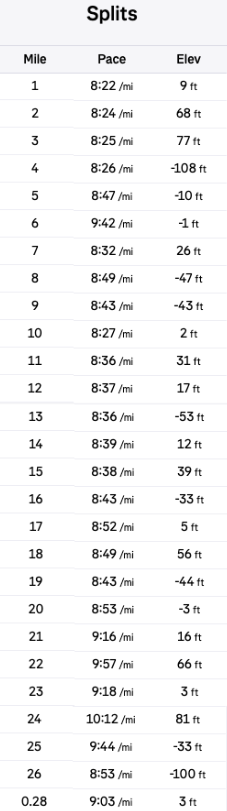
I started conservatively, right around 8:22–8:26 per mile for the first four miles. Comfortable. Controlled. The scenery was already doing a lot of heavy lifting — running along the water with the Atlantic on one side and the orange and red foliage of Acadia on the other is something else entirely. This is not running on Colfax Avenue.
Around mile 6, I made a pit stop. Nature called. The line was short, it cost me maybe a minute, and then we were back to business.
Miles 7 through 20 are what I’m most proud of. I held a remarkably steady pace — mostly in the 8:27–8:53 range — through a course with 1,700 feet of elevation gain. MDI is not a flat race. There are real climbs. When the hills came, I didn’t panic, I didn’t blow up my pace trying to power over them. I just ran. Steady. Patient. The training had prepared me for exactly this.

Nutrition & Fueling
One thing I did differently at MDI compared to Colfax was actually paying attention to nutrition. Here’s what worked:
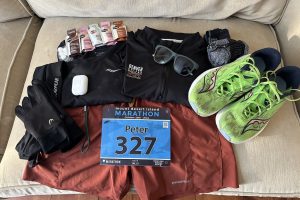
About 3 hours before the start I had a protein oat banana shake — easy on the stomach, enough fuel to get going without feeling heavy. Then 30 minutes before the gun, one GU pouch to top off the tank.
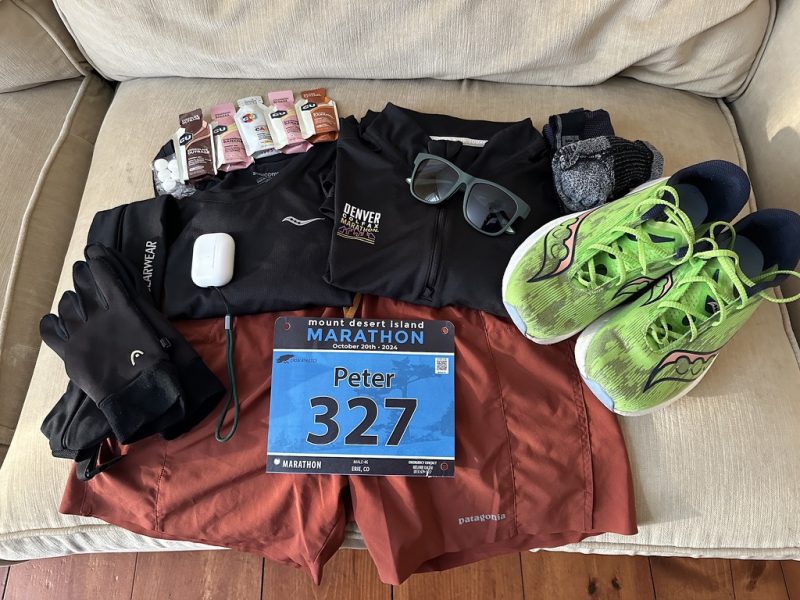
During the race I ran with 5 GU pouches total, spacing them out through the miles. For hydration I stuck to water only until mile 20, then switched to Gatorade for the final stretch when I needed the extra electrolytes.
The biggest game changer though? Salt Stick tablets. I took 5 throughout the race — first time I’d ever used them — and I had zero cramping. Zero. If you remember my Colfax report, my calves were seizing up by mile 23. At MDI, nothing. I’m convinced the Salt Sticks made all the difference and they are now a permanent part of my race day kit.
The Final Miles
Miles 21–25 got hard. I won’t pretend otherwise — the splits don’t lie (9:16, 9:57, 9:18, 10:12, 9:44). The climbing in the late miles takes its toll. But here’s the thing: it never felt like Colfax. At Colfax, mile 21 felt like a wall I ran face-first into. At MDI, miles 21–25 just felt like… the end of a hard race. Tough, yes. But manageable. My legs were tired but they weren’t done.
And then mile 26 — a beautiful 100-foot drop back toward the finish — I found another gear. 8:53. Legs? Still there.
The Finish
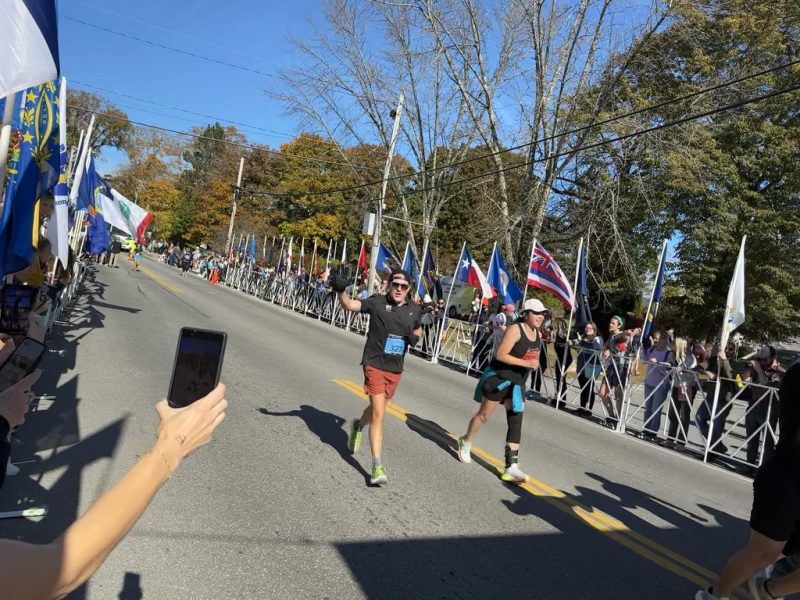
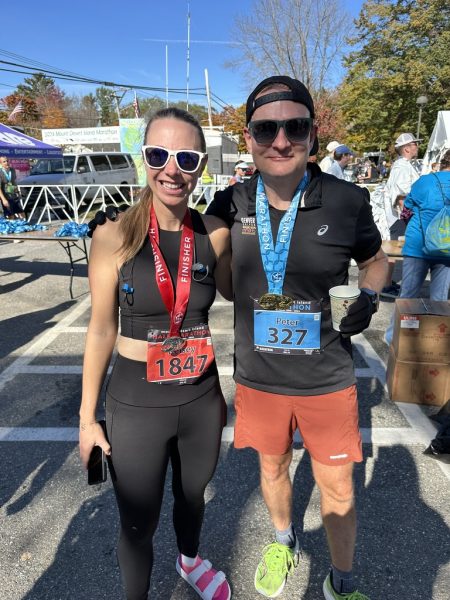
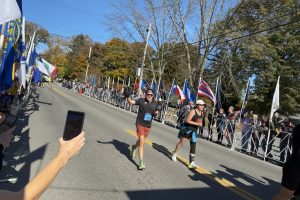
I crossed the line in 3:53:35.
Twenty-seven minutes faster than Colfax. I had shaved nearly half an hour off my marathon time in one cycle of training. I felt amazing at the finish — genuinely felt like I had more in me. Not in a “I didn’t try hard enough” way, but in a “the Hanson Method actually worked exactly as advertised” way.











What I Learned
The Hanson Method works. Full stop. You will doubt it during training — the mileage is high, the long run feels short, and there will be days where you wonder what on earth you’ve signed up for. But the cumulative fatigue is the whole point. Your legs learn to run when they’re tired. Race day, you arrive ready in ways you didn’t even realize.
The big lesson from MDI: trust the plan. Trust the training. You are more ready than you think.
“Trust the plan. Trust the training.
You are more ready than you think.”
⏱ Finish Time: 3:53:35
📏 Distance: 26.2 mi
⛰ Elevation Gain: 1,703 ft
👟 Shoes: Saucony Endorphin Pro